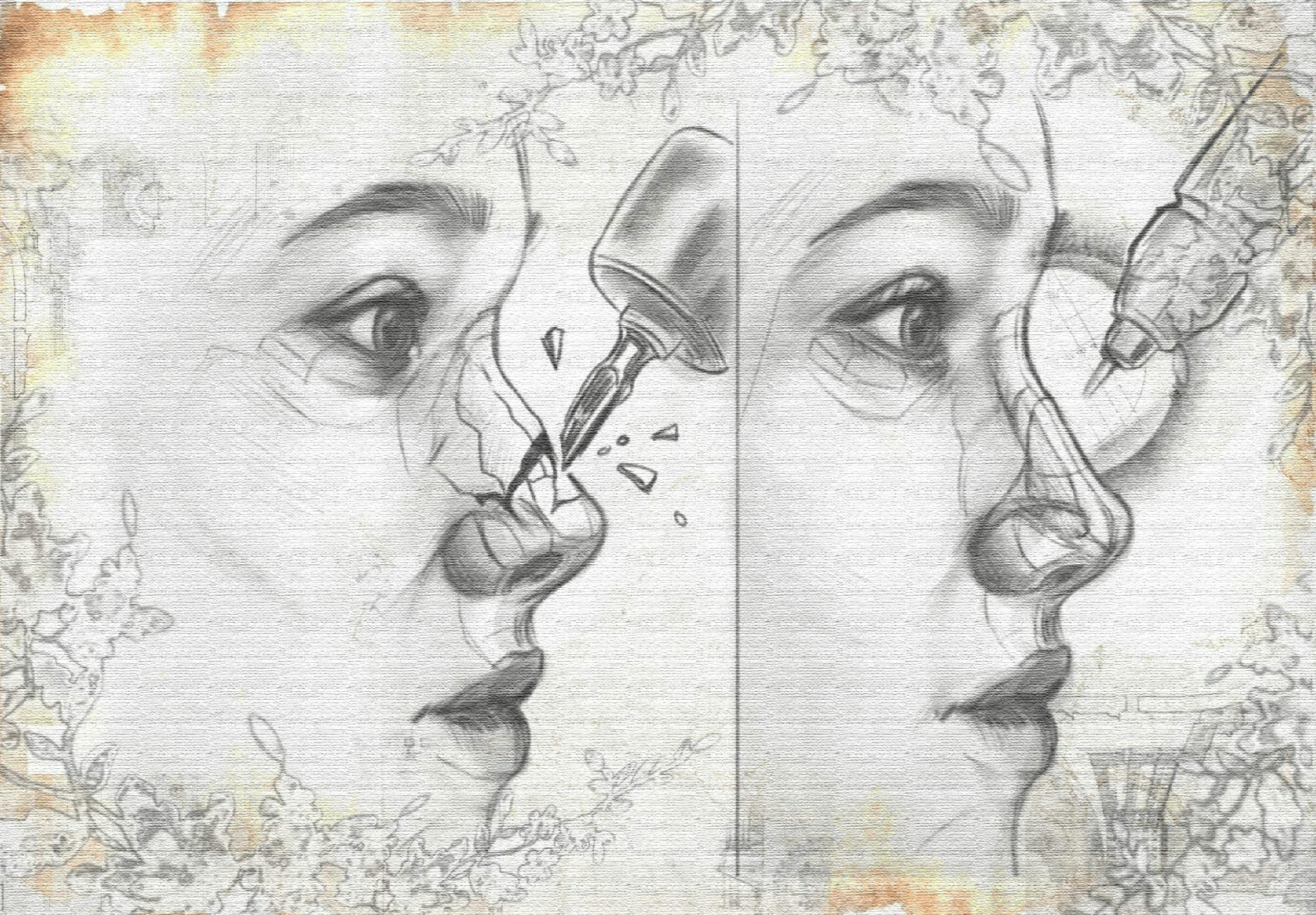
What Makes Dr. Shah's Rhinoplasty Different


1. Ultrasonic Reshaping
Many surgeons will still default to the use of chisels in their rhinoplasty. It’s known, it’s often considered the standard, it’s “ol’ reliable” . And while there may be a place for chisels in some rhinoplasties, Dr. Shah has found the use of ultrasonic tools considerably more accurate in his surgical procedures.
A Piezo Ultrasonic is designed to make sub-millimetric changes so that your bridge can be as smooth as possible, resulting in fewer revisions and higher accuracy. As well, unlike a chisel, the Ultrasonic actually allows a surgeon to see their work, while a chisel obstructs the view, leading to higher chances of failure.
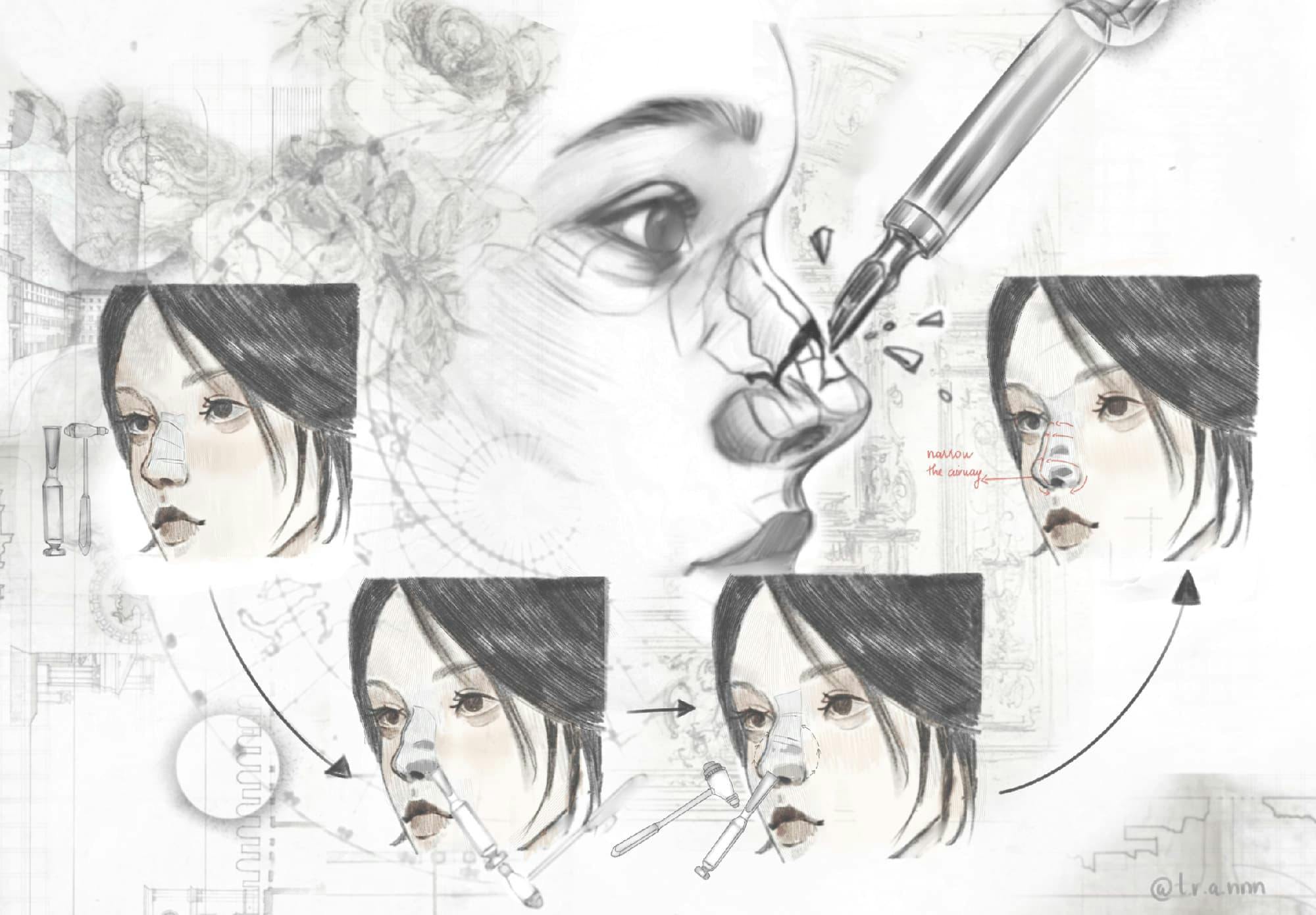
Traditional Technique
2. Widening the Airway
When straightening the nose in a rhinoplasty, your surgeon is opening one of your airway passages in order to allow the air to flow more evenly. That said, this technique does not actually increase the width of your airway. This procedure, known as a Pyriform Aperture Enlargement, was first performed in combination with a Rhinoplasty by Dr. Shah, allowing for increased function of the airway.
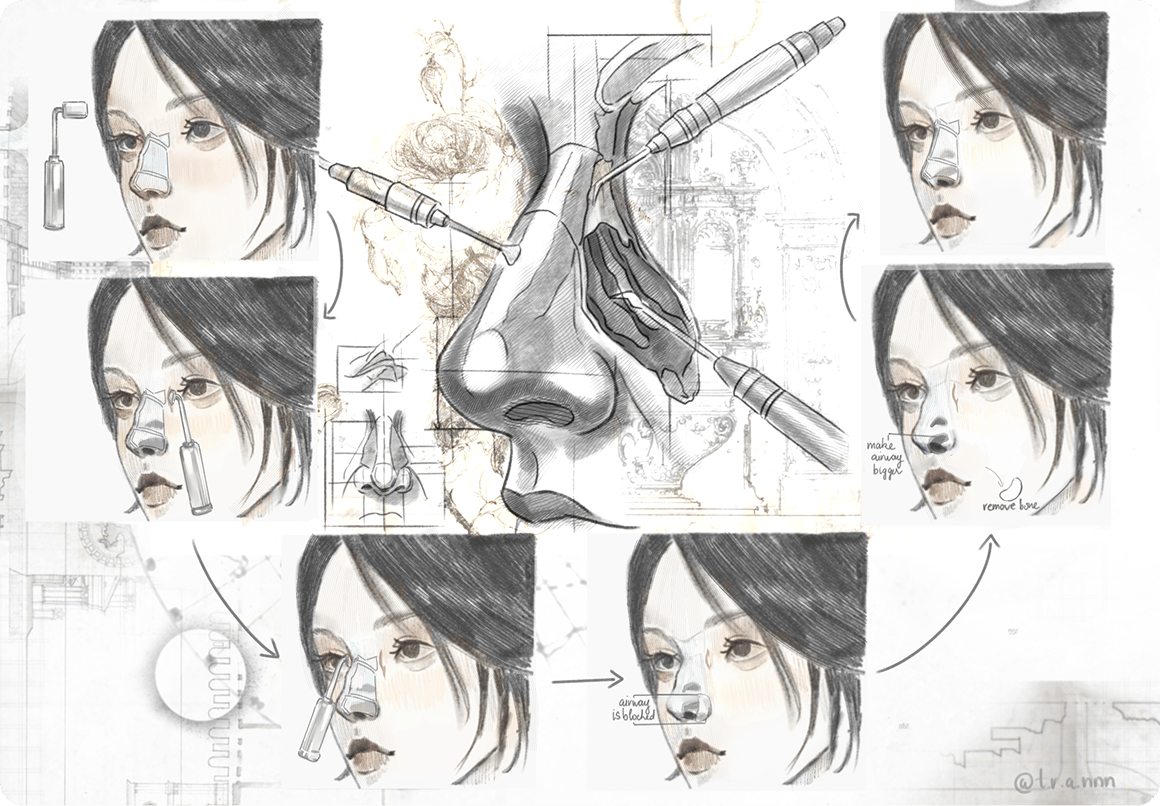
Shah's Technique
3. Multidimensional Reshaping
Dr. Shah’s 5D Rhinoplasty technique transcends standard methods of nose reshaping. Instead of just looking at the nose from basic, traditional angles, this advanced technique considers the nose in a true multi-dimensional space.
By evaluating and sculpting the nose multi-dimensionally, this approach allows for a much more refined and proportionate reshaping. The primary focus of the 5D technique is reducing the nasal structure while simultaneously enhancing your overall facial symmetry. Rather than applying a "one-size-fits-all" nose, this method achieves precision refinement that complements your unique facial aesthetics.
4. Avoidance of Narcotics
Pain management is an important part of surgical care, yet traditional approaches often rely on narcotic medications to control discomfort after rhinoplasty. It is common for patients to be prescribed opioid pain medications after surgery, even when the procedure itself is expected to cause only moderate discomfort.
An alternative approach involves the use of targeted nerve blocks during surgery. These blocks temporarily interrupt pain signals from the surgical area, allowing patients to recover with significantly less post-operative discomfort. By addressing pain at its source, nerve blocks can reduce or eliminate the need for opioid medications in many cases.
In Dr. Shah’s practice, this technique has been used to minimize reliance on narcotic pain medications following rhinoplasty. Clinical experience has shown that the vast majority of patients recover comfortably without requiring opioid prescriptions.
5. Preparation for Surgery
Recovery after surgery begins well before the procedure itself. Nutrition and metabolic preparation play an important role in how efficiently the body heals. Adequate protein intake, proper micronutrient balance, and targeted supplementation can support the processes responsible for tissue repair, collagen production, and inflammation control.
In Dr. Shah’s practice, patients are often guided through a structured pre-operative preparation protocol designed to support healing. This may include adjustments to diet and the use of specific supplements intended to provide the body with the nutrients it needs during the recovery process. By optimizing the body’s nutritional environment before surgery, patients may experience a more efficient healing response, potentially reducing bruising, swelling, and overall recovery time.
6. LASERs
For patients of Dr. Shah’s Chicago office, all LASER treatments are included in the cost of surgery to assist with minimizing scarring and bruising. While the LASER treatments are not strictly required for every patient, their application can help scarring blend and fade more effectively, and allow scars to hide seamlessly.
7. Rhinoplasty Research and Innovation
Surgical expertise is often measured not only by experience in the operating room, but also by contributions to the scientific understanding of a procedure. Advancements in rhinoplasty frequently come from surgeons who actively study anatomy, develop new techniques, and publish their findings in peer-reviewed research.
Dr. Shah’s work has contributed to several areas of rhinoplasty innovation. His research includes publications describing techniques aimed at reducing post-operative pain through specialized nerve blocks, methods for minimizing rib cartilage warping when grafts are required, and studies examining the role of the pyriform aperture in nasal structure and airway function. He has also published work addressing the correction of alar retraction, a challenging aspect of nasal reconstruction.
These contributions reflect an approach to rhinoplasty that emphasizes continual study and refinement. By combining clinical practice with research, surgical techniques can evolve to improve both functional outcomes and aesthetic results.
8. Nosecentric
When choosing a surgeon, it is important to consider not only experience, but also focus. In medicine, many physicians are trained broadly within their specialty, while others concentrate their practice on a narrower set of procedures.
This distinction can be particularly relevant in complex operations such as rhinoplasty. The nose contains delicate cartilage, bone, and airway structures, and small adjustments can significantly affect both appearance and breathing. Because of this complexity, surgeons who devote a large portion of their practice to rhinoplasty often develop a deeper familiarity with the subtle anatomical and technical challenges involved.
9. Complete Septoplasty
Septoplasty is a critical component of many rhinoplasty procedures because the nasal septum provides structural support for the nose and plays a central role in breathing. When the septum is deviated, it can contribute to both functional problems—such as nasal obstruction—and aesthetic asymmetry.
Traditional septoplasty techniques often involve removing small portions of the septal cartilage to create more space within the nasal airway. While this can relieve obstruction, it does not always fully address the underlying structural deviation. Some surgeons take a more comprehensive approach by working to straighten and stabilize the entire septal framework. By carefully repositioning and reshaping the septum, the surgeon can improve both nasal airflow and the overall alignment of the nose. Because the septum forms the central support structure of the nose, its correction is often a key step in achieving balanced aesthetic results and optimal breathing.
Dr. Shah’s research into septal anatomy and the causes of septal deviation has helped refine these techniques, emphasizing the importance of addressing the septum thoughtfully during rhinoplasty.

10. Alar Retraction
The position of the nostrils plays an important role in the overall appearance of the nose. In some cases, the nostrils may appear overly arched or elevated, a condition known as alar retraction. This can occur naturally due to anatomy, but it may also develop after rhinoplasty if the nasal structures are altered too aggressively.
Alar retraction is often considered one of the more recognizable signs of prior nasal surgery. Because of this, careful management of the nostril position is an important component of achieving natural-looking results.
Dr. Shah has published research on the anatomy and correction of alar retraction, helping to advance the understanding of how nostril position can be preserved or improved during rhinoplasty. Through careful structural techniques, surgeons can address this issue while maintaining harmony between the nostrils, nasal tip, and overall facial proportions.