

Posted by Dr. Anil R. Shah
The beauty industry has made it easier than ever to treat your skin at home. From red light masks to at-home peels and hair-removal devices, there are countless products promising professional-looking results without a trip to the doctor's office.
But not every treatment belongs in your bathroom.
Some treatments are perfectly reasonable to perform at home, while others require professional training, medical-grade equipment, or supervision to be performed safely.
Here's how to think about some of the most popular treatments.
Dermaplaning: In the Office
Professional dermaplaning uses a blade to exfoliate the surface of the skin and remove fine facial hair.
While at-home dermaplaning tools are widely available, there is a greater risk of cuts, irritation, and improper technique when performing the treatment yourself.
For patients who want professional dermaplaning, having it performed by an experienced provider allows the treatment to be tailored to your skin and performed under controlled conditions.
Red Light Therapy: Home or Office
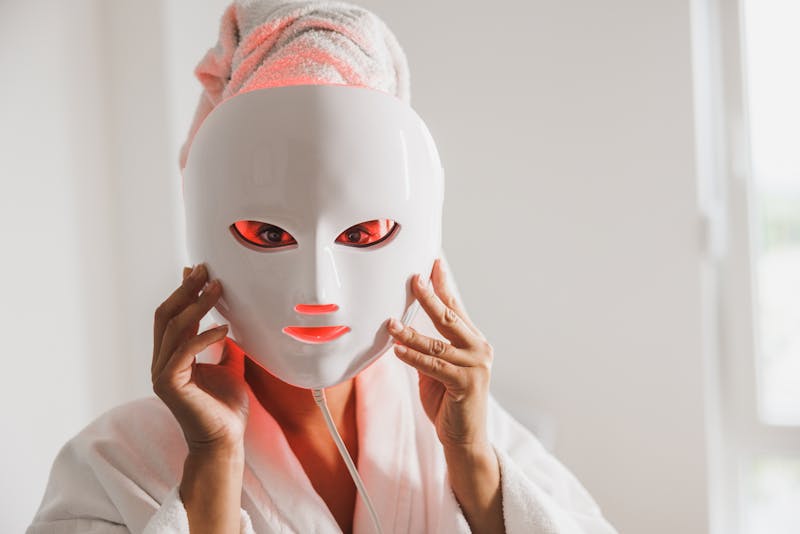
Red light therapy is one of the treatments that can reasonably be incorporated into a home skincare routine.
At-home devices can be convenient and useful for ongoing treatment. Professional systems, however, may deliver different levels of light intensity and allow for a more controlled treatment protocol.
The key with red light therapy is consistency. If you're using a home device, follow the manufacturer's instructions and don't assume that more exposure automatically means better results.
Laser Hair Removal: Office
Professional laser hair removal is generally more powerful and customizable than consumer-grade home devices.
In an office setting, the treatment can be adjusted based on factors such as skin type, hair characteristics, and the area being treated.
At-home devices may be appropriate for some people, but they generally operate at lower energy levels and may require more frequent use to achieve noticeable results.
Facials: Home or Office
A basic facial can absolutely be part of an at-home skincare routine.
Cleansing, moisturizing, exfoliating appropriately, and using sunscreen are all important components of good skin care.
Professional facials, however, can offer additional benefits through customized products, techniques, and treatments selected for your individual skin.
Think of your home routine as the foundation and professional treatments as an optional way to take your skincare to the next level.
Chemical Peels: Proceed With Caution
Chemical peels vary dramatically in strength.
Some superficial exfoliating products are designed for home use, while stronger medical-grade peels should be performed by a trained professional.
The deeper the peel, the greater the potential for complications if it isn't used correctly.
For that reason, stronger chemical peels are best performed in a controlled clinical setting where the appropriate product and treatment parameters can be selected for your skin.
Microneedling: Leave It to the Professionals
Microneedling involves creating controlled punctures in the skin to stimulate a healing response.
Professional microneedling devices can penetrate the skin at controlled depths, and improper technique can lead to complications including infection, pigmentation changes, prolonged irritation, and scarring. The FDA recommends choosing a provider who is appropriately trained in microneedling.
Radiofrequency microneedling requires additional caution. The FDA has reported serious complications associated with certain uses of RF microneedling, including burns, scarring, fat loss, and nerve damage.
This is one treatment where professional oversight is particularly important.
GLP-1 Medications: Medical Supervision Matters
GLP-1 medications have become increasingly popular for weight management, and telehealth has made access to these medications more convenient.
The important question isn't simply whether your provider is online or in an office. What's important is whether you're receiving appropriate medical evaluation, a legitimate prescription, proper dosing instructions, and ongoing monitoring.
An in-person visit can offer advantages for some patients because a clinician can perform a more comprehensive assessment and track changes in weight, health, and body composition over time.
If you're using a telehealth provider, make sure you're working with a licensed medical professional who appropriately evaluates you and remains available for follow-up. The FDA has specifically warned consumers about telehealth arrangements that don't require appropriate screening or access to a licensed clinician, as well as concerns surrounding some compounded GLP-1 medications.
Hyperbaric Oxygen Therapy: Definitely Not a DIY Treatment
Hyperbaric oxygen therapy is very different from an at-home skincare treatment.
HBOT involves breathing high concentrations of oxygen under increased atmospheric pressure. Because of the high oxygen environment and pressurized chamber, proper equipment, training, and safety protocols are essential.
The FDA has warned about serious injuries and deaths associated with HBOT devices and emphasizes the importance of following device instructions and maintaining appropriate fire-safety procedures.
This is absolutely not a treatment to experiment with at home.
The Bottom Line
Convenience doesn't always equal safety.
Some treatments—such as basic skincare and certain red light devices—can be incorporated into a home routine. Others, including professional microneedling, stronger chemical peels, medical laser treatments, and hyperbaric oxygen therapy, are better handled by trained professionals.
When you're unsure, ask a qualified medical professional before trying a new treatment, particularly if it involves needles, lasers, strong chemicals, prescription medications, or pressurized oxygen.
The goal isn't to do everything in the office. It's to know which treatments are safe and appropriate to do at home—and which ones are worth leaving to the professionals.
If you’re considering a cosmetic or wellness treatment and aren’t sure whether at-home care is enough, professional guidance can help. Schedule a consultation with Dr. Shah to discuss your goals and find the treatments that are right for you.