
Posted by Dr. Anil R. Shah
My patients often come in thinking, “If I just get one super aggressive hair transplant, I’ll be set for life.”
I understand why that sounds appealing, but that’s not how hair loss works.
I’m always cautious when I hear about someone receiving a mega-transplant, saying they’ve had upwards of 10,000 grafts moved in a single session. Anatomically, that’s simply not realistic for most patients. When numbers get that high, it often means grafts are being overharvested, poorly distributed, or in some cases, that 30-40% of those hairs may not survive long term.
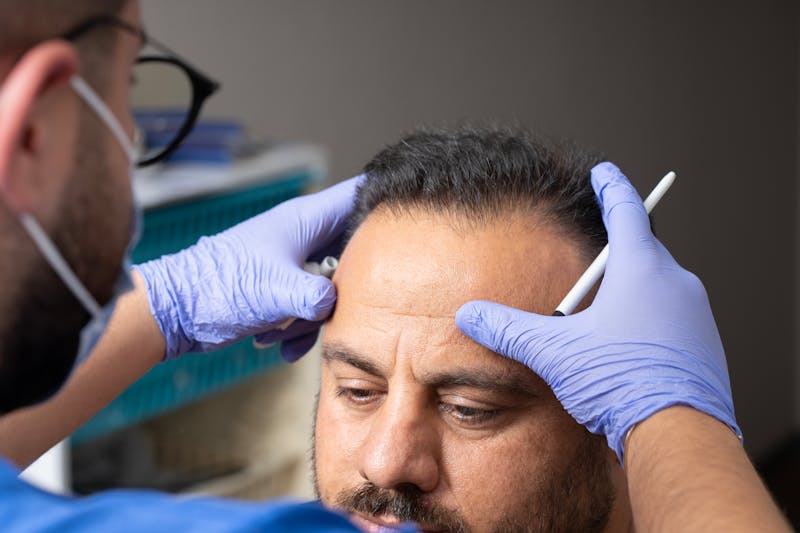
The reality is that most patients will need more than one hair transplant over the course of their lifetime. Unfortunately, that isn’t always clearly discussed upfront. Many patients walk in believing it’s a one-and-done solution, one procedure and they’re finished forever.
But hair loss doesn’t work that way.
Even in my own journey, I’ve had two transplants, the second just a few years after the first. Not because the first failed- it absolutely did what it was supposed to do- but because my hair loss continued to progress and I wanted more density than I was seeing.
And this was with comprehensive supplemental care: finasteride, laser therapy, PRP, and exosomes.
Sometimes, even when you’re doing everything right, progression continues. That’s the nature of genetic hair loss. And in order to maintain or improve density over time, a second procedure may simply be part of the long-term plan.
The goal shouldn’t be to “do it all at once.”
The goal should be to build a strategy that respects anatomy, preserves donor supply, and adapts as your hair changes over time.
That’s how you get results that last.