
Posted by Dr. Anil R. Shah
Healing is an important part of any cosmetic procedure. While your surgeon's technique, your overall health, and following postoperative instructions all play major roles, some patients are interested in additional treatments that may support the healing process.
One option is hyperbaric oxygen therapy (HBOT).
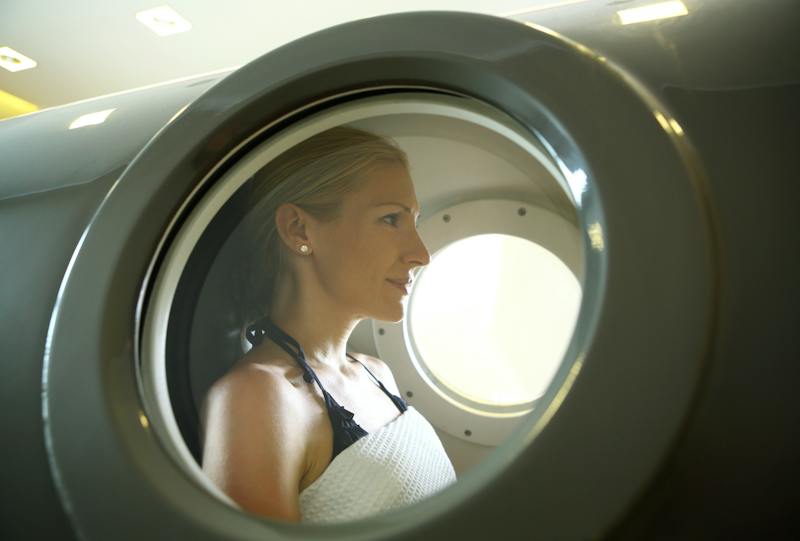
Hyperbaric oxygen therapy involves breathing concentrated oxygen in a pressurized chamber. The increased pressure allows more oxygen to dissolve into the blood and reach tissues throughout the body.
So, can hyperbaric oxygen therapy actually help after cosmetic procedures?
The answer depends on the procedure.
How Could Hyperbaric Oxygen Therapy Support Healing?
Oxygen plays an important role in tissue repair. Adequate oxygen delivery helps support processes involved in wound healing, including tissue repair and collagen production.
The goal of hyperbaric treatment isn't simply to make recovery faster. In appropriate situations, increased oxygen availability may help support more predictable wound healing and tissue recovery.
However, HBOT isn't necessary for every cosmetic procedure, and the potential benefit varies depending on the type of treatment and the patient's individual circumstances.
CO2 Laser Resurfacing
CO2 laser treatments intentionally create controlled injury to the skin to stimulate a healing response and improve skin texture.
Because the treatment involves significant skin healing, hyperbaric oxygen therapy may be particularly interesting following more aggressive CO2 laser resurfacing.
Some clinicians use HBOT as an adjunct with the goal of supporting wound healing and potentially reducing recovery time.
The exact benefit will depend on the treatment settings, the patient's skin, and the postoperative protocol.
Revision Rhinoplasty
Revision rhinoplasty can be more complex than primary rhinoplasty because the tissues have already undergone surgery.
For that reason, some surgeons consider additional measures to support healing following revision procedures.
Hyperbaric oxygen therapy may be considered in select patients, particularly when there are concerns about tissue healing. Whether it provides meaningful benefit after a routine rhinoplasty is less clear and should be evaluated on an individual basis.
Face and Neck Lift
A facelift or face and neck lift involves repositioning facial tissues and managing skin and soft-tissue healing.
Because adequate blood flow and oxygen delivery are important during recovery, some surgeons recommend HBOT as an adjunct following these procedures, particularly in patients who may have an increased risk of wound-healing problems.
It should be viewed as a potential complement to—not a replacement for—proper surgical technique and postoperative care.
Hair Transplantation
Hair transplantation is another procedure where tissue healing and blood supply are important.
Some practitioners use hyperbaric oxygen therapy as part of a postoperative protocol with the goal of supporting the healing of transplanted tissue.
However, evidence for routine HBOT following hair transplantation is still evolving, so patients should discuss whether it makes sense for their particular procedure.
What About Morpheus8?
Morpheus8 and other energy-based treatments create controlled injury in the skin and underlying tissues to stimulate remodeling.
Because the treatment involves a healing response, there is a theoretical reason to consider whether additional oxygen could support recovery.
However, the benefit of HBOT following these treatments isn't as established, and it may not be necessary for most patients.
Upper Blepharoplasty
Upper eyelid surgery generally involves a relatively small surgical area, and most healthy patients heal without additional treatments.
Hyperbaric oxygen therapy isn't typically necessary after an uncomplicated upper blepharoplasty.
That said, supporting wound healing may potentially help optimize scar maturation in selected situations. Whether the additional treatment is worthwhile depends on the individual patient and their recovery.
When HBOT May Not Add Much
Not every cosmetic procedure creates the type of tissue injury where hyperbaric oxygen therapy is likely to provide a meaningful benefit.
For example, treatments such as Botox, lip filler, and Hydrafacial generally don't require the type of wound healing associated with major surgery or aggressive resurfacing.
Similarly, there isn't a clear reason to routinely use HBOT after every cosmetic injectable treatment.
Kybella, which works through a different mechanism to reduce submental fat, also doesn't typically require hyperbaric oxygen therapy as part of routine recovery.
Is Hyperbaric Oxygen Therapy Right for You?
HBOT isn't a universal recovery treatment.
Whether it makes sense depends on the procedure, your health, your healing history, and whether there are specific concerns about tissue recovery.
It's also important to understand that hyperbaric oxygen therapy has its own considerations, potential risks, and contraindications. It should be performed under appropriate medical supervision.
The Bottom Line
Hyperbaric oxygen therapy may be a useful adjunct to recovery for certain cosmetic and reconstructive procedures, particularly those involving significant tissue injury or concerns about wound healing.
It may be worth discussing after procedures such as CO2 laser resurfacing, selected revision rhinoplasty cases, face and neck lifts, and potentially hair transplantation.
For treatments such as Botox, Hydrafacial, and many injectable procedures, HBOT generally isn't necessary.
The most important factor is choosing the right treatment for the right patient at the right time. Hyperbaric oxygen therapy should complement—not replace—good surgical technique, appropriate postoperative care, and careful follow-up with your medical team.
If you’re planning a cosmetic procedure or currently recovering, hyperbaric oxygen therapy may be worth considering as part of your postoperative care. Schedule a consultation with Dr. Shah to discuss your procedure and whether HBOT may be appropriate for your recovery.