

Posted by Dr. Anil R. Shah
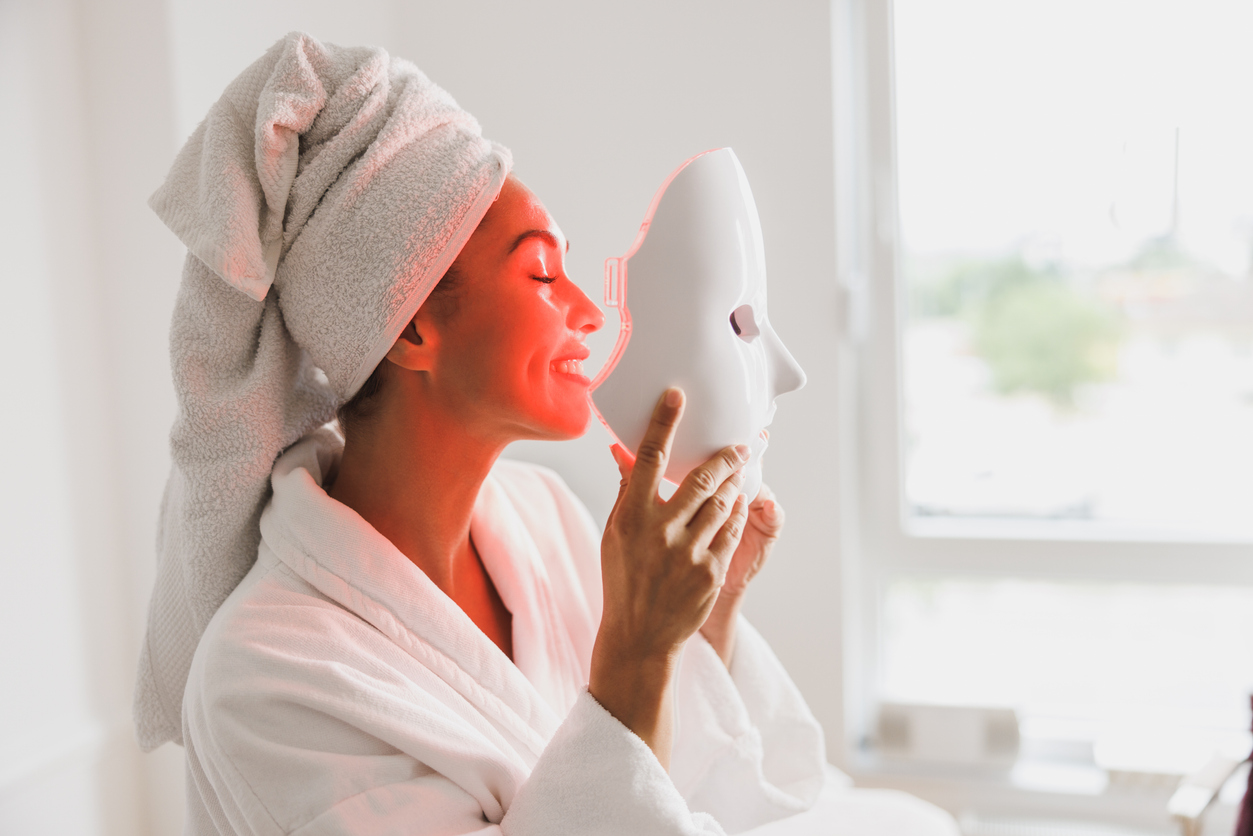
LED face masks are everywhere right now. They look futuristic, they are easy to use at home, and they fit perfectly into the current skin longevity conversation. For patients who want better skin without downtime, the appeal is obvious. Put on the mask, sit for a few minutes, and hopefully support smoother, calmer, healthier-looking skin over time.
But as more brands enter the market, the claims are getting bigger. More lights. More colors. More wavelengths. More modes. More “pro” features. Some devices now combine LED technology with lasers, while others advertise hundreds or even thousands of light points across the face.
It all sounds impressive, but the real question is much simpler: does the device actually deliver the right kind of light, at the right strength, to the right area, consistently enough to matter?
That is where patients can get lost, because the marketing around LED masks often makes the conversation more confusing than it needs to be.
What LED Masks Are Trying to Do
LED masks fall under the broader category of photobiomodulation, sometimes shortened to PBM. The basic idea is that certain wavelengths of light may interact with cells in ways that support skin function, inflammation control, collagen-related pathways, and healing responses.
For aesthetic patients, the most talked-about wavelengths are red light and near-infrared light. These are often used for skin rejuvenation, recovery support, fine lines, texture, and overall skin quality. Blue light is different. It is most often discussed in relation to acne-prone skin because of the way it can interact with acne-associated bacteria.
That does not mean every color in a mask is equally useful. It also does not mean every patient should be using every wavelength at once. A good light-based plan should start with the skin concern, not the flashiest device.
If the goal is skin rejuvenation, red and near-infrared light are usually the most interesting. If the goal is acne support, blue light may have a role. If the goal is pigment control, melasma management, or calming sensitive skin, the conversation becomes more specific and more cautious.
More Lights Do Not Automatically Mean Better Results
A lot of LED masks are marketed by the number of light points they contain. A mask may advertise 300 LEDs, 600 LEDs, 800 lights, or more. That number may sound important, but on its own, it does not tell you much.
What matters more is whether those lights are producing the right wavelength, whether the energy is strong enough to reach the skin in a meaningful way, and whether the mask gives reasonably even coverage across the treatment area.
A mask with fewer well-positioned, effective lights may be more useful than a mask with many weak lights that do not deliver enough energy. More lights can help if they improve coverage and dose, but the number alone should not be treated as proof that the mask is better.
This is why irradiance matters. Irradiance refers to the amount of light power reaching a given area of skin. When a company publishes information like wavelength and irradiance, it gives patients and providers a better way to understand what the device may actually be delivering.
Without that information, a device may simply be glowing red without giving you much clarity about dose, power, or expected benefit.
Laser vs. LED: Is One Better?
Some newer face masks combine LED light with lasers, which can make them sound more advanced. Technically, lasers and LEDs are different. Laser light is more focused and specific, while LED light is broader and more diffuse. Lasers may sound stronger, and in some settings they can be.
But for at-home skin photobiomodulation, the word “laser” does not automatically mean better.
What matters is the wavelength, dose, power, treatment time, and how consistently the light is delivered to the skin. If an LED and a laser are both delivering an appropriate wavelength and dose, the laser label alone does not guarantee a better skin result.
That does not mean laser-containing masks are useless. It simply means patients should not buy a device only because it says “laser.” The more important question is whether the device provides useful, transparent technical information and whether the wavelengths make sense for the patient’s goals.
In other words, the biology matters more than the branding.
Be Careful With “All Wavelengths at Once”
Some masks include multiple colors or modes, including settings that turn on every wavelength at the same time. At first, that sounds logical. If one wavelength is good, wouldn’t more wavelengths be better?
Not necessarily.
Photobiomodulation is not about throwing every color at the skin and hoping for the best. Different wavelengths have different proposed effects, and not every wavelength is equally appropriate for every patient.
Blue light is a good example. It can be helpful for acne-prone skin, but it is not something every patient needs automatically. Patients with darker skin types, melasma, or a tendency toward hyperpigmentation may need to be more cautious with visible light exposure, especially shorter wavelengths like blue light.
That does not mean blue light should never be used. It means it should be used for the right patient, for the right reason, with appropriate guidance.
This is why an “all” mode may not be the best choice for everyone. More is not always smarter. Sometimes targeted treatment makes more sense.
What Results Can You Realistically Expect?
LED masks are not instant transformation devices. They are consistency devices.
For skin rejuvenation, red and near-infrared light may support fibroblast activity, collagen-related pathways, fine lines, skin texture, and elasticity over time. For acne-prone skin, blue light may help as part of a broader acne plan, while red light may offer additional calming or anti-inflammatory support.
But patients should think in terms of weeks and months, not days. A few sessions are unlikely to create a dramatic visible change. With at-home devices, consistency matters, and even then, the result is usually subtle and supportive rather than surgical or resurfacing-level correction.
An LED mask will not replace Botox if the concern is muscle movement. It will not replace filler if the issue is volume loss. It will not replace lasers or microneedling if the concern is deeper texture, scarring, or significant collagen remodeling. It also will not replace a medical-grade skincare routine or sun protection.
But it may be a useful support tool when used correctly.
How to Decide Whether a Mask Is Worth It
Before buying an LED mask, look beyond the number of lights and the number of colors. Ask what wavelengths the device uses. Look for red and near-infrared light if your goal is general skin rejuvenation. Consider blue light only if acne is part of the concern and your skin type is appropriate for it.
Next, look for transparency. Does the brand publish irradiance or other technical details? Does it explain treatment time and frequency clearly? Does it provide eye protection guidance? Does it make realistic claims, or does it sound like it is promising a facelift in mask form?
A simpler device with red and near-infrared light, adequate power, and clear technical information may be more useful than a very expensive mask loaded with extra wavelengths that do not have as much evidence behind them.
At Aesthetic Skin, we think of light therapy as one part of a larger skin plan. It can support skin quality, recovery, acne care, and maintenance in the right patient, but it should be chosen thoughtfully.
The best mask is not always the one with the most lights.
It is the one that delivers the right light, at the right dose, for the right reason.
Get Personalized Skin Care Guidance
Not sure whether an at-home LED mask is worth adding to your routine? The team at Aesthetic Skin can help you determine which treatments and technologies make sense for your skin, your concerns, and your long-term goals. Schedule a consultation to create a personalized plan for healthier, more radiant skin.