
Posted by Dr. Anil R. Shah
I see many patients who come into my office who have gone to amazing surgeons for their upper blepharoplasties, but they’re missing one key component to ensuring longevity from their procedure: the brow.
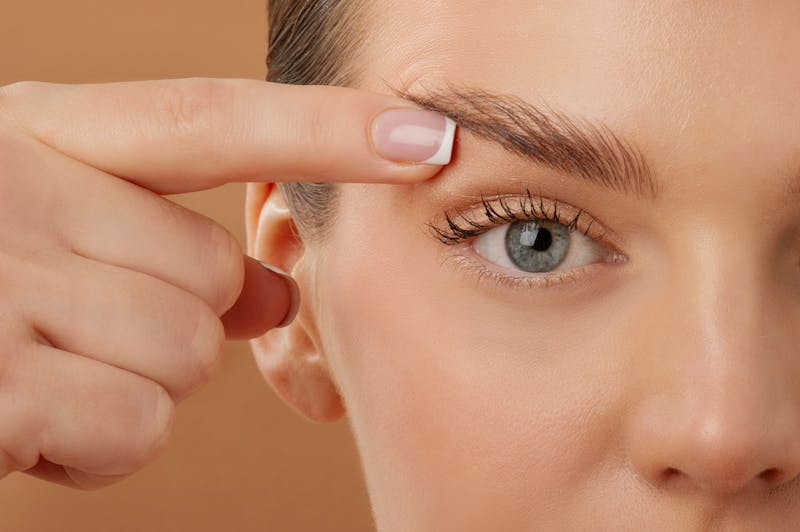
When you treat the upper eyelid, you have to evaluate and often treat the brow alongside it.
On a deeper level, the eyelid and brow are wired together in a far more complex way than most people realize. Dr. Matsuo, a researcher from Japan, demonstrated that ptosis — a droopy or “sleepy” eyelid — can lead to a drooping brow on the same side. He even found connections extending down to the trapezius muscle in the neck.
There’s more interconnected anatomy here than meets the eye. Pun partially intended.
But beyond the neurological connection, there’s also simple biomechanics.
When you remove skin from the upper eyelid, where does the tension go?
Almost always, it pulls downward.
If you remove 3mm of upper eyelid skin, you may inadvertently drag the brow down 1–2mm. That’s why combining a brow lift with an upper blepharoplasty often creates a more durable result.
And to be clear — the goal of a browlift isn’t always to dramatically elevate the brow. In many cases, it’s about stabilizing the brow position, relaxing overactive muscles, and creating a balanced foundation so the eyelid surgery can be performed properly. When the brow is stable, the eyelid can heal without fighting gravity or muscular pull.
Patients who address both the brow and the eyelid together often experience longer-lasting, more harmonious results — sometimes truly “one-and-done,” or needing only one additional touch-up procedure in their lifetime.